Brand equity refers to a value premium that a company generates from a product with a recognizable name when compared to a generic equivalent. Companies can create brand equity for their products by making them memorable, easily recognizable, and superior in quality and reliability. Mass marketing campaigns also help to create brand equity.
When a company has positive brand equity, customers willingly pay a high price for its products, even though they could get the same thing from a competitor for less. Customers, in effect, pay a price premium to do business with a firm they know and admire. Because the company with brand equity does not incur a higher expense than its competitors to produce the product and bring it to market, the difference in price goes to their margin. The firm’s brand equity enables it to make a bigger profit on each sale.
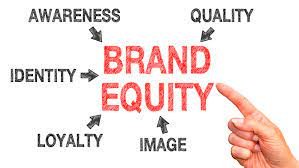
What Is Brand Equity?
Brand equity is when a company generates a value premium from the recognition of a product or brand name. The idea is that when a product is highly recognisable and has positive associations, consumers attribute more value to the corresponding brand. This kind of exemplary branding creates value for the product because it creates an organic channel for exposure, which means the brand has a high mental recall with consumers.
Benefits Of Developing Equity For A Brand
It can charge higher prices-A company without strong equity for its brand may need to charge consumers the benchmark, or market average, price for its products. When a brand has strong equity, it can charge higher prices than its competitors. Consumers are more willing to pay a higher price for a product if it comes from a brand they trust.
It can acquire a greater market share- A company with strong equity for its brand can acquire a greater market share than its competitors. This benefit is especially useful in oversaturated industries that have hundreds of businesses that offer the same or similar products. When a brand acquires a greater market share, it can have a more meaningful impact on its target audience. It may also invite more investing opportunities from interested parties and allow for lucrative collaboration possibilities.
It can expand its product line- Once a brand has strong equity, it can consider expanding its product line. Consumers may be more willing to try a company’s latest offerings if they already have strong faith in its current offerings. By expanding its product line, a company can appeal to a more diverse audience and increase its profit margins.
Types Of Metrics To Measure Equity For A Brand
- Consumer metrics: You can track consumers’ sentiments and purchasing behaviours through the results of social media monitoring and customer surveys.
- Strength metrics: You can measure the strength of a brand by monitoring the brand’s licensing potential, retention, accessibility and the customer loyalty it garners.
- Financial metrics: Financial metrics like customer acquisition costs, customer retaining costs, revenue and profitability can also help measure a company’s equity.
How To Build Equity For A Brand
1. Create better brand awareness- One of the easiest ways you can build equity for a brand is to create better brand awareness. Ensure that the brand’s target audience is familiar with the brand and does not forget about its offerings. One way to create brand awareness is to keep a brand’s use of logos and images consistent. When audiences see the same colours, font and images for a brand, they can more easily associate the visuals with the correct company.
Another way to create better brand awareness is to provide great customer service. Establish a team that has the sole responsibility of answering customers’ questions and addressing their concerns. You may also create better brand awareness by providing ongoing value, maintaining customer communication via newsletters and writing an uplifting story for the brand and sharing it accordingly.
2. Relay the brand’s meaning and purpose-Another way to build equity for a brand is to communicate the brand’s meaning and purpose. Understand what physical needs the brand is trying to meet for its customers. For example, a company that sells vacuums may want to help customers clean their carpeted floors more efficiently. You can also attempt to understand and convey the psychological and social needs that a brand is trying to fulfil. The same company might be trying to reduce stress in their customers’ busy lives and create more free time for them to spend with
3. Encourage positive feelings and judgments among customers- Customers often have feelings and judgments about the products they consume and the brands with which they interact. As you are trying to build equity for a brand, you can make efforts to encourage positive feelings and judgments. You can facilitate feelings and judgments with the marketing materials that the brand releases to the public. Positive feelings you can foster include those of security, self-respect, trust, excitement and contentment. Judgments you can attempt to facilitate include those that relate to the brand’s capability, quality, credibility and superiority in comparison to its competitors.
4. Establish loyalty with the brand’s customers- You can establish loyalty with a brand’s customers by encouraging repeat purchases. Focus on communicating the product’s quality and long-term relevance so that customers show loyalty to the brand. As a result, repeat customers may act as ambassadors for the brand, sharing its benefits with their friends and family. The brand may not need to spend as much to gain new customers, as existing ones may complete some of the advertising on its behalf.
FAQs
How is Brand Equity Different from Brand Value?
Brand equity is about consumer perceptions and loyalty, while brand value is often a monetary estimate of the brand’s overall worth to a company, including tangible and intangible assets.
What Factors Contribute to Building Brand Equity?
Factors include consistent brand messaging, quality products or services, positive customer experiences, effective marketing, brand associations, and emotional connections with consumers.
Why is Brand Equity Important for a Business?
Brand equity can positively impact a business by enhancing customer loyalty, influencing purchasing decisions, allowing for premium pricing, and providing a competitive advantage in the market.
Practice area's of B K Goyal & Co LLP
Income Tax Return Filing | Income Tax Appeal | Income Tax Notice | GST Registration | GST Return Filing | FSSAI Registration | Company Registration | Company Audit | Company Annual Compliance | Income Tax Audit | Nidhi Company Registration| LLP Registration | Accounting in India | NGO Registration | NGO Audit | ESG | BRSR | Private Security Agency | Udyam Registration | Trademark Registration | Copyright Registration | Patent Registration | Import Export Code | Forensic Accounting and Fraud Detection | Section 8 Company | Foreign Company | 80G and 12A Certificate | FCRA Registration |DGGI Cases | Scrutiny Cases | Income Escapement Cases | Search & Seizure | CIT Appeal | ITAT Appeal | Auditors | Internal Audit | Financial Audit | Process Audit | IEC Code | CA Certification | Income Tax Penalty Notice u/s 271(1)(c) | Income Tax Notice u/s 142(1) | Income Tax Notice u/s 144 |Income Tax Notice u/s 148 | Income Tax Demand Notice | Psara License | FCRA Online
Company Registration Services in major cities of India
Company Registration in Jaipur | Company Registration in Delhi | Company Registration in Pune | Company Registration in Hyderabad | Company Registration in Bangalore | Company Registration in Chennai | Company Registration in Kolkata | Company Registration in Mumbai | Company Registration in India | Company Registration in Gurgaon | Company Registration in Noida | Company Registration in lucknow
Complete CA Services
RERA Services
Most read resources
tnreginet |rajssp | jharsewa | picme | pmkisan | webland | bonafide certificate | rent agreement format | tax audit applicability | 7/12 online maharasthra | kerala psc registration | antyodaya saral portal | appointment letter format | 115bac | section 41 of income tax act | GST Search Taxpayer | 194h | section 185 of companies act 2013 | caro 2020 | Challan 280 | itr intimation password | internal audit applicability | preliminiary expenses | mAadhar | e shram card | 194r | ec tamilnadu | 194a of income tax act | 80ddb | aaple sarkar portal | epf activation | scrap business | brsr | section 135 of companies act 2013 | depreciation on computer | section 186 of companies act 2013 | 80ttb | section 115bab | section 115ba | section 148 of income tax act | 80dd | 44ae of Income tax act | west bengal land registration | 194o of income tax act | 270a of income tax act | 80ccc | traces portal | 92e of income tax act | 142(1) of Income Tax Act | 80c of Income Tax Act | Directorate general of GST Intelligence | form 16 | section 164 of companies act | section 194a | section 138 of companies act 2013 | section 133 of companies act 2013

