Authorised Capital VS Paid up Capital

Every Company irrespective of size, type of business, category of business, etc. will have its share capital classified under various types in its financial statement. However, the Companies Amendment Act, 2015 have omitted the provision of minimum paid-up capital requirement for the Companies but the requirement of authorised share capital still exists. In this Article, we shall […]

MeeSeva – Andhra Pradesh

MeeSeva

A Andhra Pradesh Caste Certificate can be obtained by residents of Andhra Pradesh to access a variety of government services & subsidies aimed toward particular groups of people. An applicant may approach and submit the necessary application forms to the Government of Andhra Pradesh’s Integrated Service Delivery Department for Andhra Pradesh Caste Certificate registration services.

NPS vs EPF

NPS vs EPF

All the employees covered under the EPF scheme now have the option to switch to NPS scheme in order to use a number of tax benefits and savings that are applicable under NPS. It is best to compare and analyse the different features of the two options. Employees that are currently covered under the EPF scheme have the option

National Permit Online

national permit online

A national permit is a document issued by the transport authority to indicate that a commercial vehicle is authorised for goods carriage across the country. State governments can issue two different permits for goods carriage: state permits and national permits. Central Motor Vehicles Rules, 1989 Section 86: Application for national permitAn application for the grant

Rajasthan Property Registration

Rajasthan Property Registration

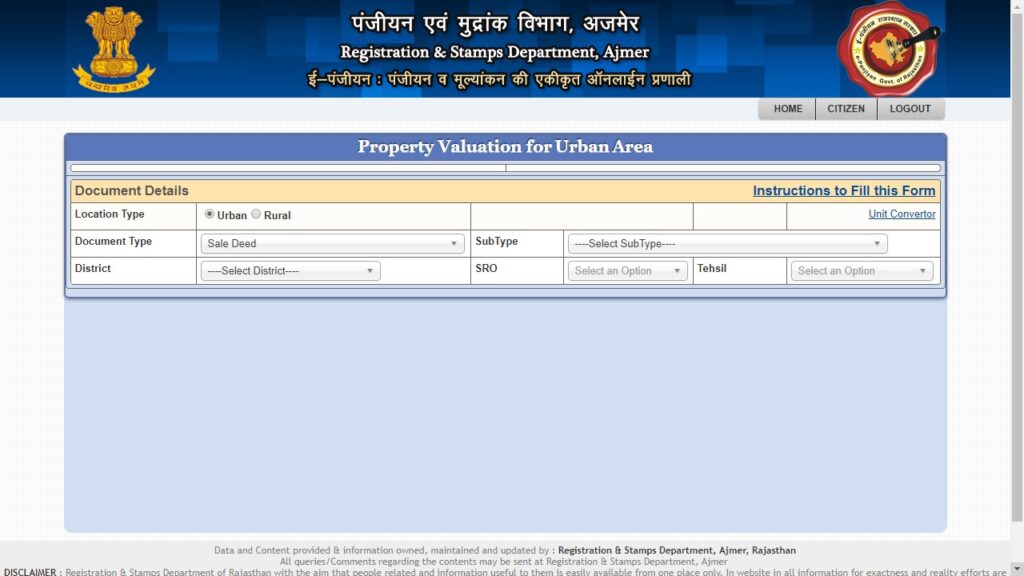
E-panjiyan is the official portal of the Inspector-General of Registration and Stamps (IGRS) of the Rajasthan government, which oversees the property transactions in the State. As per the Rajasthan Registration Act 1955, every property transaction should be registered on the E-panjiyan Rajasthan that holds the digital records of property transfers and registrations. E-panjiyan also provides

Non-Creamy Layer Certificate

Non-Creamy Layer Certificate

The Non-Creamy Layer (NCL) certificate, also referred to as the Other Backwards Class (OBC) certificate, is granted to individuals who meet specific eligibility criteria. It was introduced by former Prime Minister V. P. Singh in 1993. Holders of the OBC certificate are eligible for reservation benefits and specific allocations in prestigious universities as well as public

Gujarat Records of Rights – Khatian

Gujarat Record of Rights – Khatian

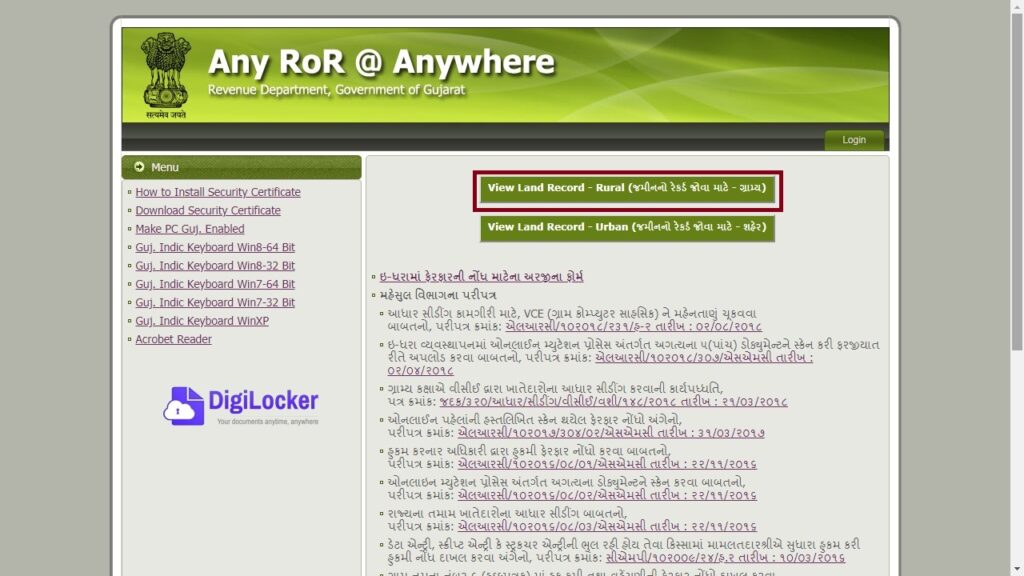
The Government of Gujarat, the AnyROR E-Dhara portal aims to provide easy access to registered land records, including 7/12, 8A, and 8/12 extracts. Users in both rural and urban areas of the State can access the portal for crucial land-related documents, evading the hassle of visiting offices. Gujarat Record of Rights (ROR) is an extract from the

Registrar of Companies (ROC)

registrar of companies (roc)

The Registrar of Companies (ROC) is an office managed by the Ministry of Corporate Affairs (MCA), that deals with the administration of companies and Limited Liability Partnerships across the country. According to Section 609 of the Companies Act, ROCs are tasked with the principal duty of registering both the companies and LLPs across the states and union territories.

What is a Partnership Deed?

What is a Partnership Deed

A partnership firm is one of the popular types of organisations for starting a new business in India. A minimum of 2 partners are required to start a partnership firm. Partners establish a partnership firm through a partnership deed. A partnership deed is an agreement between the partners of a firm that outlines the terms and conditions of partnership among the partners.  A partnership deed,

S. 14(1) Hindu Succession Act

S. 14(1) Hindu Succession Act

The main object of the Hindu Succession Act, 1956 (the Act) is to remove inequalities between men and women with respect to rights in property and evolves a list of heirs entitled to succeed on intestacy based on natural love and affection rather than religious efficacy.The Hindu Succession Act of 1956 was passed by the