Section 13 – Trade Marks Act, 1999

Prohibition of registration of names of chemical elements or international non- proprietary names. No word— (a)   which is the commonly used and accepted name of any single chemical element or any single chemical compound (as distinguished from a mixture) in respect of a chemical substance or preparation, or (b)   which is declared by […]
Section 12A – Trade Marks Act, 1999

[Qualifications, terms and conditions of service of Chairperson, and Member Notwithstanding anything contained in this Act, the qualifications, appointment, term of office, salaries and allowances, resignation, removal and the other terms and conditions of service of the Chairperson and other members of the Appellate Tribunal appointed after the commencement of Part XIV of Chapter VI

New Millennium Indian Technology Leadership Initiative by CSIR

New Millennium Indian Technology Leadership Initiative by CSIR

The New Millennium Indian Technology Leadership Initiative (NMITLI) is a unique research and development (R&D) program launched by the Council of Scientific and Industrial Research (CSIR), India. It aims to position India as a global technology leader in key emerging areas by fostering public-private partnerships in innovation-driven research. Overview of NMITLI Launched by: CSIR (Council

Section 12 – Trade Marks Act, 1999

Registration in the case of honest concurrent use, etc In the case of honest concurrent use or of other special circumstances which in the opinion of the Registrar, make it proper so to do, he may permit the registration by more than one proprietor of the trade marks which are identical or similar (whether any

Employment on the Rise, but WageGrowth Lags Behind Inflation

Employment on the Rise, but Wage Growth Lags Behind Inflation

Niti Aayog member Arvind Virmani has said that while employment is increasing in India, real wages for regular jobs have not kept pace with inflation over the past seven years. India has an opportunity in terms of the global population, and there is a need to take advantage of it. For this, improving the quality

Trade Receivables Discounting System (TReDS)

Trade Receivables Discounting System (TReDS)

The Trade Receivables Discounting System (TReDS) is an online platform introduced by the Reserve Bank of India (RBI) to help Micro, Small, and Medium Enterprises (MSMEs) get quicker payments for their invoices. It enables MSMEs to sell their unpaid invoices to financiers (banks and NBFCs) at a discount, ensuring faster cash flow. Eligible Entities The

Transport Loan Scheme

transport loan scheme

“Transport Loan Scheme” by the Delhi Scheduled Castes, Scheduled Tribes, Other Backward Classes, Minorities & Safai Karamchari Finance and Development Corporation (DSFDC), Government of NCT of Delhi, aims to promote self-employment among beneficiaries of the target groups by providing term loans for the purchase of Light Motor Vehicles (LMVs). The scheme offers financial assistance up

Proof of Concept (POC)

Proof of Concept (POC)

A Proof of concept (POC) is the process of gathering evidence to support the feasibility of a project. Project managers perform a POC in the early stages of development before committing too much time and resources to a project. The purpose of a proof of concept is to demonstrate project viability to product teams, clients,

Note Book Manufacturing – Business Plan

Note Book Manufacturing - Business Plan

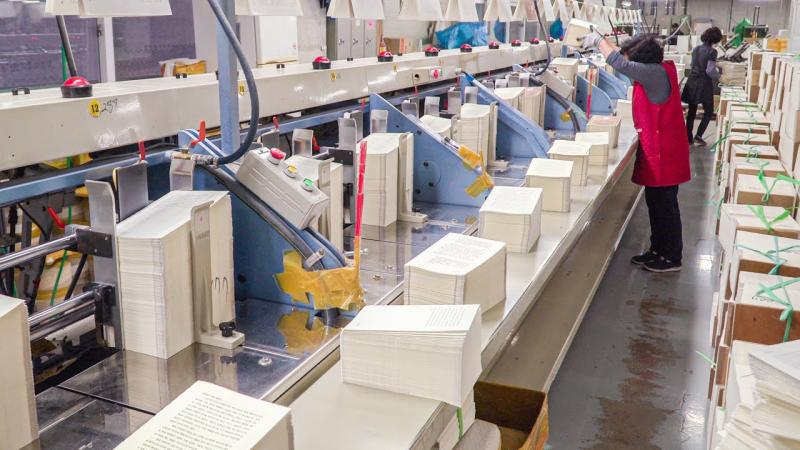
Starting a notebook manufacturing business can be a profitable venture, as notebooks are always in demand by students, professionals, and businesses.There is always a demand for notebooks amongst students and businesses. Though the internet has changed the way we communicate and transfer messages, the requirement for writing tools and stationary has never decreased. Types of note

Section 11 – Trade Marks Act, 1999

Relative grounds for refusal of registration (1)Save as provided in section 12, a trade mark shall not be registered if, because of— (a)   its identity with an earlier trade mark and similarity of goods or services covered by the trade mark; or (b)   its similarity to an earlier trade mark and the identity